

When Prevention Fails, Resilience Keeps the Business Running.
Most cybersecurity strategies are built to prevent attacks. Far fewer are built to keep the business running when prevention fails.
That gap is becoming increasingly visible. According to Absolute’s Resilient CISO survey, nearly seven in ten organizations experienced a successful endpoint attack in the past year. In many cases, recovery took days or weeks, not hours. The disruption that followed often mattered more than the initial incident itself.
This is the reality security leaders are now expected to manage.
The defining question has shifted from “How do we stop every attack?” to “How quickly can we restore operations when something breaks?” The answer is cyber resilience, and it has become the missing link in modern cybersecurity strategies. Learn more on fast and efficient endpoint recovery
When Security Works, Until It Doesn’t
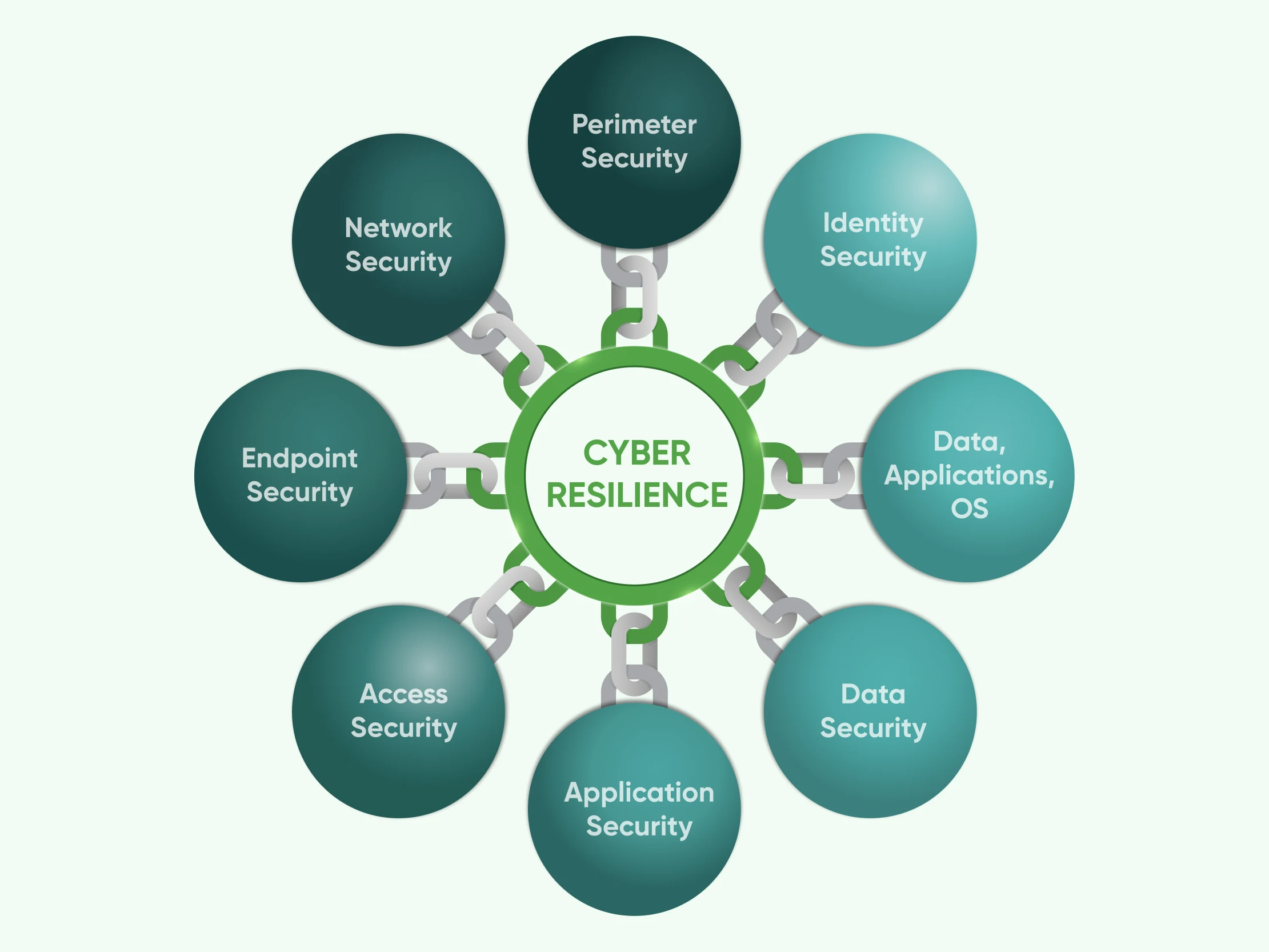
Security investments have never been stronger. Organizations deploy layered defenses across endpoints, identities, networks, and cloud environments. These tools reduce risk and limit exposure. They remain essential.
But they share a critical assumption: that they will continue functioning during an incident.
In real-world attacks, that assumption often breaks down. Common failure points include:
- Endpoints being isolated to contain spread
- Security agents losing connectivity or failing
- Operating systems becoming corrupted or rebuilt
- Loss of visibility at the moment it is needed most
At that point, the organization is no longer dealing with a security issue alone. It is dealing with an operational failure.
This disconnect explains why many CISOs feel that, despite heavy investment, their environments remain fragile under disruption. Prevention did its job. Recovery was never designed into the system.
Risk Can Be Reduced. Impact Must Be Managed.
Cybersecurity has long focused on reducing risk. Controls lower the likelihood of compromise. Detection shortens dwell time. Response limits spread.
But reducing risk does not guarantee business continuity.
Even well-defended organizations experience failure. When they do, the impact shows up as:
- Extended downtime
- Lost productivity
- Delayed services
- Erosion of trust
The Resilient CISO survey reinforces this reality. Many organizations report that recovery is slowed by manual remediation, help desk workflows, or the need for physical device access. In hybrid and distributed environments, those approaches do not scale.
Cyber resilience exists to address what happens next. It limits business impact when risk becomes real.
The Boardroom Has Changed the Conversation
This shift is now evident at the executive and board level.
Boards are less interested in how many threats were blocked and more focused on how long operations would be disrupted if systems failed. Analyst research consistently shows that recovery remains the least mature part of most security programs, even as prevention and detection continue to improve.
As a result, CISOs are accountable not only for reducing risk, but for ensuring continuity.
The board’s core questions are changing:
- How quickly can we recover?
- What systems would remain unavailable?
- How confident are we in restoring control at scale?
Cyber resilience provides a credible answer.
What Cyber Resilience Really Means for CISOs
Cyber resilience is often misunderstood. It is not another product or a new security category. It does not replace prevention.
It is an operational capability.
Cyber resilience is the ability to maintain or reestablish control during and after disruption. It assumes failure will occur and focuses on minimizing consequences.
In practical terms, resilience answers questions traditional security does not:
- Can we restore control of compromised endpoints at scale?
- Can we recover critical applications without manual intervention?
- Can we reestablish trust even if the operating system has failed?
Prevention reduces probability. Resilience determines duration and severity.
Both matter. Only one stops downtime.
Endpoints Are the Center of the Challenge
Endpoints sit at the center of the cyber resilience challenge.
They are the most targeted assets and the most operationally critical. When endpoints lose control, users are locked out, applications fail, and security teams lose visibility.
They are also the hardest place to recover.
Most security controls depend on the operating system and network connectivity. When either is compromised, recovery becomes slow and inconsistent. Automation gives way to manual processes. Scale disappears.
True endpoint resilience requires control that survives failure.
Persistence Enables Real Recovery
The most resilient systems share one principle: control must persist beyond disruption.
That persistence cannot depend on a functioning operating system or active agent. It must exist below the OS, in a place that cannot be easily removed or disabled.
When control is anchored at the firmware level:
- Devices can be restored after OS corruption or reinstallation
- Security tools and applications can be re-established remotely
- Visibility can be regained without user action
Recovery becomes predictable, not reactive.
Faster recovery reduces cyber downtime, limits disruption, and builds executive confidence.
Closing the Missing Link
Cybersecurity has matured, but it has also revealed its limits.
The missing link has never been another control. It is the ability to recover, restore, and continue operating when failure occurs.
Until organizations design for recovery, disruption will remain inevitable and costly. Cyber resilience connects security strategy to operational reality and gives CISOs a credible story to take to the board.
In a world where disruption is unavoidable, resilience is no longer optional. It is what determines whether cybersecurity truly protects the business.
Learn how security leaders design for recovery, reduce downtime, and maintain control during disruptions. Download The Resilient CISO eBook for actionable insights to strengthen your cyber resilience strategy.