Sensitive data leaks start at the endpoint
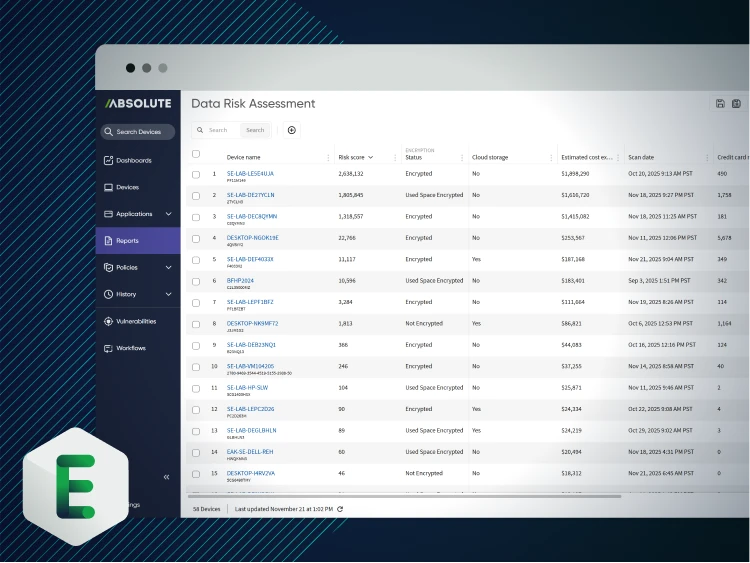



The problem
Think sensitive data is safe behind the firewall? Every endpoint is a potential leak. PII, PHI, financials, and intellectual property quietly accumulate on laptops and remote devices you barely track. Perimeter controls can’t protect what already lives on the endpoint—leaving teams guessing where sensitive data resides and hoping exposure stays hidden.
The cost of hidden data exposure
When sensitive data leaks from an endpoint, the consequences escalate quickly. Regulatory fines, breach notifications, lost trust, and operational disruption often follow—long before teams even know what data was exposed. Without clear visibility into where sensitive files live or whether they’re protected, organizations face prolonged investigations, delayed containment, and growing risk every day endpoints remain unmanaged.

The Absolute Secure Endpoint solution we implemented has delivered everything we hoped for and more, giving us complete visibility into security risks and enabling us to protect endpoints from hostile threats.
Own the endpoint. Control your data.
Network controls can’t protect data that already lives on the endpoint. Absolute Secure Endpoint puts control back at the device layer, where sensitive files are created, stored, and often forgotten.
By continuously discovering sensitive data on endpoints, verifying encryption status, and scoring risk in context, teams can act decisively — not reactively. Delete exposed files, freeze risky devices, or execute secure wipe actions to eliminate exposure before it escalates. All actions are centrally logged, turning data protection from an assumption into something you can explicitly prove.
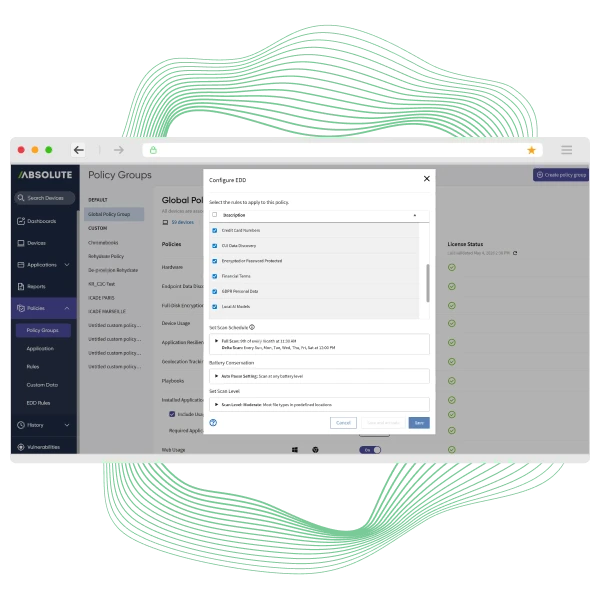
See endpoint data exposure before it becomes a breach
Discover sensitive data on endpoints, verify encryption status, and take immediate action to prevent exposure—without relying on network visibility alone.
- Discover sensitive data directly on devices
- Assess and prioritize data risk on endpoints
- Take targeted actions to stop exposure fast
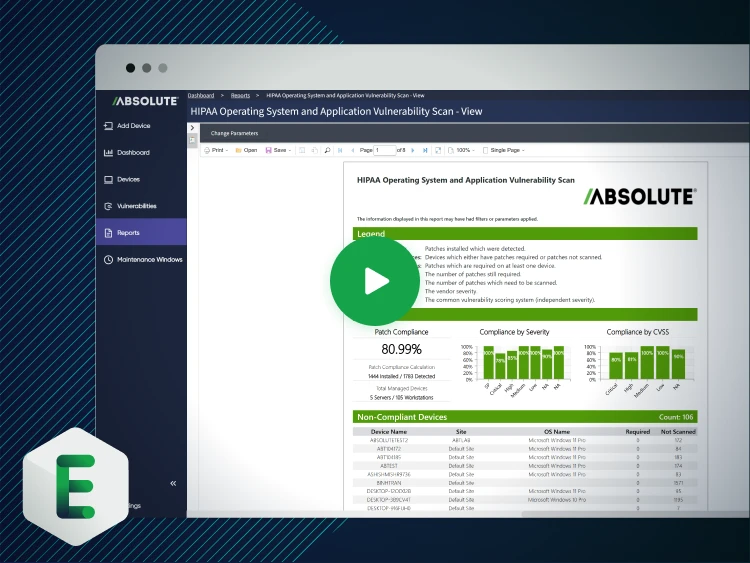


How Smith Anderson stopped endpoint data exposure
Smith Anderson used Absolute Secure Endpoint to discover sensitive client data on laptops, enforce encryption, and take targeted protection actions. With continuous visibility and control at the device level, the firm reduced compliance risk while securing client trust.
- Proven results: Enforced encryption and device‑level controls
- Actionable insight: Continuous compliance with less manual effort
Key capabilities for preventing endpoint data exposure

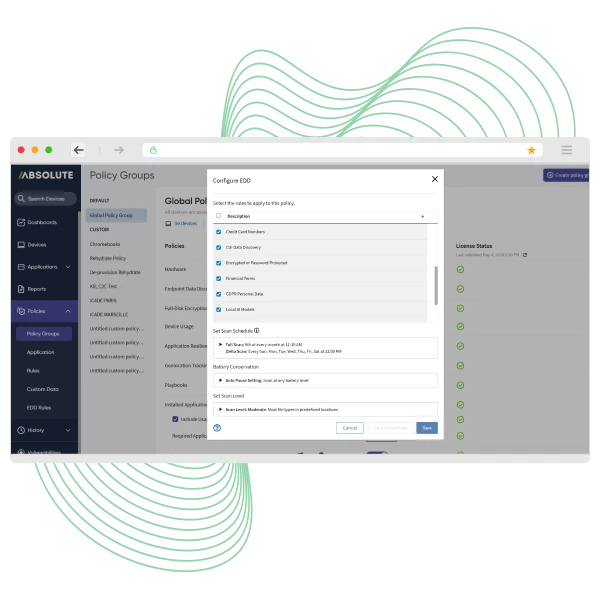
Continuously scan endpoints to discover files containing PII, PHI, financial records, and proprietary IP—even when devices are offline.

Assign risk scores to endpoints based on the sensitivity of the data they hold and their current security posture, allowing you to prioritize your efforts.

Verify the encryption status of drives and files on every device, flagging any endpoint with unencrypted or improperly secured data.

Remotely delete specific sensitive files, freeze the device to render it unusable, or execute a full device wipe to ensure data cannot be recovered.

Generate detailed reports on data discovery scans, risk assessments, and protection actions to provide a clear audit trail for regulators and stakeholders.
Prevent endpoint data exposure before it’s too late
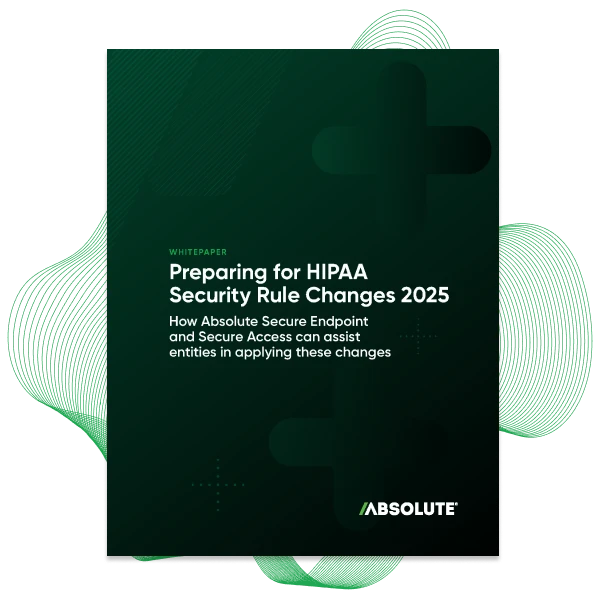
Get expert guidance on securing sensitive data and maintaining compliance across your entire device fleet with our white paper: Preparing for HIPAA Security Rule Changes 2025.
- In-Depth Analysis: Explore strategies for encryption enforcement, automated remediation, and continuous compliance.
- Practical Framework: Learn how to reduce risk and simplify audits with proven endpoint security controls.
Stop guessing where your data lives
Ready to see what true data visibility looks like at the edge? Request a free Resilience for Automation trial to discover better ways to protect your data and avoid costly incidents.
- Discover and secure sensitive data on endpoints, even offline.
- Minimize risk and compliance headaches; before they become disasters.

Featured resources for preventing endpoint data exposure
FAQ: Protecting Sensitive Data on Endpoints
Traditional DLP focuses on monitoring data in transit across the network. Our approach is device-centric. We perform endpoint data discovery directly on the device, meaning we can find and secure sensitive files regardless of network status. This is crucial for remote and hybrid workforces where devices are often disconnected from the corporate network.
Our solution can identify a wide range of sensitive data types, including Personally Identifiable Information (PII) like social security numbers, Protected Health Information (PHI), financial data such as credit card numbers, and intellectual property. The discovery process is customizable to align with your organization's specific data classification policies.
The Absolute agent is embedded in the device firmware through our patented Persistence technology. This creates a self-healing connection. If the agent is tampered with, corrupted, or even if the entire OS is wiped and the drive replaced, it will automatically reinstall itself. This ensures your visibility and control remain intact.
Our risk scoring algorithm analyzes multiple factors, including the volume and sensitivity of data found, the device's security posture (e.g., encryption status, active security controls), and its location. This provides a quantifiable risk score for each endpoint, enabling IT and security teams to focus remediation efforts on the devices that pose the greatest threat.
Yes. By providing continuous visibility into where PII/PHI on endpoints is located, you can take proactive steps to secure it and demonstrate proof of control to auditors. The ability to monitor encryption status and remotely wipe data helps you meet key technical requirements of regulations like GDPR, CCPA, and HIPAA.