Linux OS Management and Patching
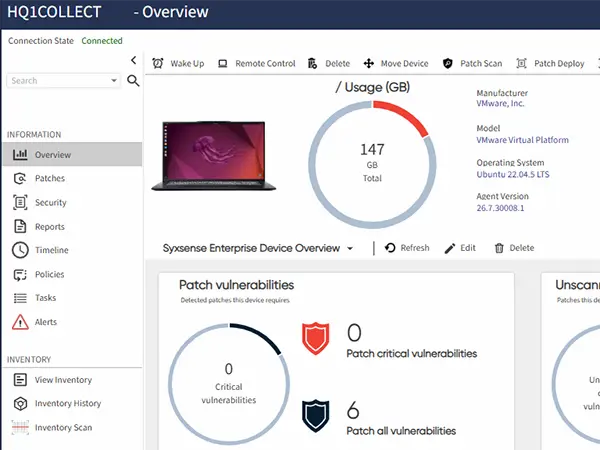



The problem
Linux management usually lands in a separate console, with a narrower set of actions, patched on its own schedule instead of alongside everything else. The smallest part of the fleet ends up the easiest part to let slip.
Your smallest attack surface hides your biggest risk
It’s easy to deprioritize the handful of Linux devices in a mostly-Windows fleet. But those devices are disproportionately servers, running critical data and infrastructure — the one place a known exploited vulnerability actually matters most.

We don’t get to decide which devices attackers go after. If your smallest fleet is your least-covered fleet, that’s exactly where they’ll look.
Servers and workstations, one control point
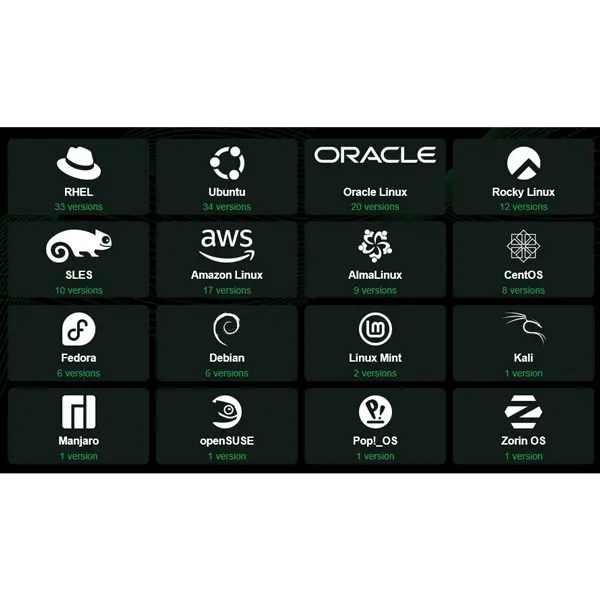
Sixteen distribution families, 162 individually patched versions — servers and workstations alike, managed through the same console and the same action library as every other OS. Patching, remediation, and configuration workflows all run through one control point, so Linux isn’t the exception that needs a different tool — it gets the same depth of automation and patching coverage as Windows, from RHEL to Ubuntu to Kali and more.
.webp)
Server-grade coverage, workstation simplicity
Native, versioned patch support — RHEL, Ubuntu, SLES, CentOS Stream, Rocky Linux, AlmaLinux, Debian, and more.
Every supported version individually tracked and patched, not just the major releases.
One console manages both, whether it’s a critical server or a desktop workstation.
Patching, remediation, and configuration workflows run through the same action library as every other OS.
Remediation prioritized by confirmed active exploitation, not CVSS severity alone.
No separate tooling for Linux — manage it alongside Windows in the same place.
AI is closing the window. Your Linux servers are in it.
AI tools are accelerating how fast vulnerabilities get discovered and exploited, compressing the gap between exposure and attack to machine speed. This webinar covers what that means for the systems you can least afford to lose.
- See why the window between exposure and exploitation is shrinking.
- Learn how to translate that risk into action before downtime hits.

Close the Linux Coverage Gap
See how Absolute patches Linux at the same depth as Windows — servers, workstations, on your distributions.
- See the breadth: 16 distribution families, 162 patched versions, one console.
- See it prioritized: KEV-confirmed exploits surfaced first, not buried in CVSS scores.
- See it unified: No separate tool — Linux runs through the same console and actions as Windows.

Take a deep-dive into patching resources
Linux Patching FAQs
16 distribution families, including RHEL, Ubuntu, SLES, CentOS Stream, Rocky Linux, AlmaLinux, Debian, and more — 162 individually patched versions in total.
No — both get the same patching and workflows, through the same console as every other device in the fleet.
Yes. Linux runs through the same console and action library as Windows, so there’s no need for a separate tool.
Vulnerabilities confirmed as actively exploited (CISA KEV) are surfaced and prioritized ahead of CVSS severity scores alone.
Yes — the same trigger-based automation and remediation actions apply across Linux, Windows, and macOS.
Because those few devices are disproportionately servers running critical infrastructure and data — a small fleet doesn’t mean small risk.