Endpoint Analytics and Telemetry
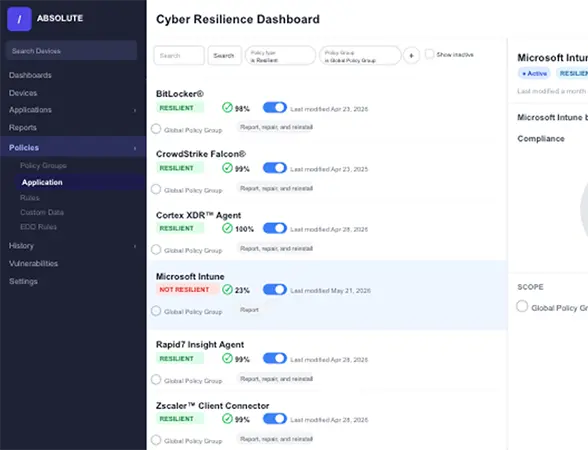



The problem
Most endpoint tools stop at CPU, memory, and agent health. That tells you a device is running — not whether it’s actually protected, compliant, or recoverable when something goes wrong.
Looking healthy is not the same as protected
A device can report normal CPU usage, an active agent, and a recent check-in — and still be one failed control away from a breach. 98% of CISOs who experienced an incident say a security control failed during it. Standard telemetry has no way to see firmware-level tampering, a silently disabled security control, or whether the device could actually recover if the OS itself were compromised. That blind spot is where the real risk lives.

A device that looks healthy but can’t recover isn’t healthy — it’s downtime waiting to happen. That’s the gap we built our telemetry to close.
Three tiers of telemetry. One true picture.
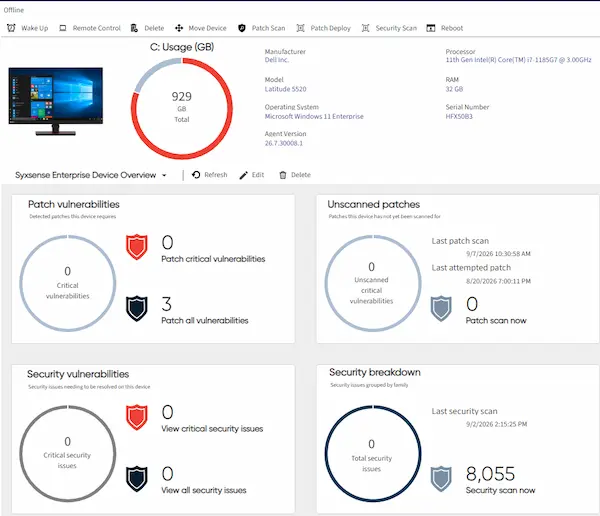
Absolute collects three tiers of data: operational (hardware, patch state, performance), security (vulnerabilities, misconfigurations, compliance posture), and a third tier no other platform offers — resilience data anchored below the OS. That third tier tracks firmware persistence, self-healing status, recovery capability, and device trust, so you know not just whether a device is running, but whether it can actually protect and recover itself when something goes wrong.
Essential capabilities for endpoint analytics
Hardware, patch state, performance, and uptime — the baseline layer every platform tracks.
Vulnerabilities, misconfigurations, and compliance posture, mapped to real risk.
Persistence, self-healing status, recovery capability, and device trust — a tier no other platform offers.
Keeps reporting even when the OS is wiped, the agent is removed, or the device goes dark.
CPU, memory, disk, agent health, and uptime — continuously refreshed, not periodically scanned.
Insights drawn from a 15M-endpoint telemetry panel and a 750-CISO survey.
Installed software by device or population, plus health monitoring across ~2,000 Windows/Mac apps with self-mitigation.
Login and interaction-based usage, daily usage by device, and web/app ROI on Windows and Chromebook.
AI-based risk assessment and behavior analytics via Absolute Intelligence, plus natural-language querying via an AI assistant.
Any of these data points can trigger an automated action — telemetry isn’t just observed, it’s acted on.
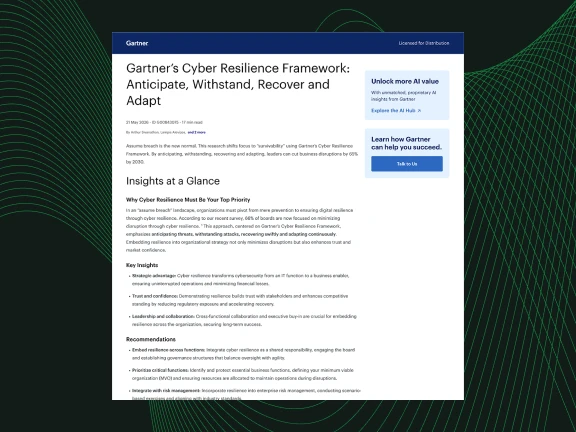
Anticipate, withstand, recover, adapt — the framework behind resilience
Prevention alone stopped being a strategy. This report lays out the framework security leaders are using to anticipate threats, withstand attacks, recover fast, and adapt continuously.
- See why visibility into device state is the foundation of all four pillars.
- Learn how leaders are measuring resilience, not just compliance.
See what protected actually looks like
Most tools show you a device is running. See what it actually takes to know a device is protected.
- Prove recoverability: Confirm a device can actually survive and recover, not just report in.
- Go deeper: View firmware persistence and self-healing status alongside standard telemetry.
- Catch it early: Spot the 21% gap before it becomes an incident.
.webp)

Go deeper on endpoint telemetry and resilience
Endpoint Analytics FAQs
It’s firmware-anchored resilience data — persistence, self-healing status, recovery capability, and device trust — collected below the OS, where standard operational and security telemetry can’t reach.
21% of endpoints report as compliant on a standard dashboard while actually operating unprotected — a gap invisible to both standard telemetry and end users.
No — it adds a third layer on top of them. Operational and security data still matter; resilience data closes the gap they can’t see.
Yes. CPU, memory, disk, agent health, and uptime are continuously refreshed, not periodically scanned.
The 2026 Cyber Resilience Risk Index, combining large-scale endpoint telemetry with a survey of 750 CISOs.
Yes — because it’s anchored in firmware below the OS, it keeps reporting even when the operating system or agent is gone.