

Compliance Automation for Enterprise IT Teams, Explained
Key Takeaways
- Compliance automation has two distinct layers, and most tools only cover one. Evidence-collection platforms document your compliance posture; enforcement automation fixes the drift behind it. Enterprise IT needs both, not one mistaken for the other.
- Evidence automation has a real ceiling. Even with hundreds of integrations across cloud, identity, and endpoint systems, GRC platforms typically automate only 40-60% of evidence collection in a clean cloud-native stack, and considerably less once legacy or off-network devices are in the mix.
- The ROI case for the evidence layer is well documented. An IDC study of Vanta customers found a 526% three-year ROI, 82% less time spent on audits while completing 142% more attestations, and 81% faster security reviews.
- Regulatory deadlines are tightening the window for drift to hide. PCI DSS v4.0.1's expanded secure-configuration requirements became mandatory for all in-scope entities on March 31, 2025, with no further grace period.
What compliance automation actually covers
"Compliance automation" gets sold as one category, but it's really describing two different jobs. The first is documenting your compliance posture: collecting evidence, mapping controls to a framework, and producing what an auditor needs to see. The second is maintaining that posture: catching a misconfigured setting or a missing patch and fixing it before it becomes a finding.
Most of the market, and most of the budget, goes toward the first job. That's useful, and the ROI data backs it up, but it quietly assumes the second job is already handled somewhere else. For a lot of enterprise IT teams, it isn't.
Why manual compliance doesn't scale
The cost case for automating the evidence layer alone is strong. An IDC study of Vanta customers found a 526% return on investment over three years, with a three-month payback period. On the productivity side, teams in the study spent 82% less time on audits while completing 142% more attestations, and saw security reviews move 81% faster.
That kind of gain comes from automating what's genuinely automatable: pulling evidence from systems with good APIs, cloud configuration, identity and access, ticketing, on a continuous basis instead of scrambling for it once a year. What it doesn't change is what happens when that evidence reveals a problem. Someone, or something, still has to go fix it.
The two layers of compliance automation
Evidence and enforcement are different capabilities, usually sold by different kinds of vendors.
GRC and evidence-collection platforms. Tools in this category centralize audit prep, control mapping, and continuous evidence collection across integrated systems. They're strong at answering "what's our compliance status right now," and considerably weaker at answering "can you fix this for me," which generally isn't their job.
Endpoint-level enforcement automation. A smaller category of tooling acts directly on the device: correcting a drifted configuration, re-enabling a disabled control, or closing a vulnerability against a framework like CIS or HIPAA without waiting for a person to action a ticket. Automox's Worklets are one example built specifically for this, automating remediation against CIS benchmarks and HIPAA controls at the endpoint itself.
The two aren't competitors so much as different layers of the same stack. Evidence platforms are strongest when there's less drift underneath them to document, and that's exactly what enforcement automation is for.
Why the window for drift to hide is closing
Regulatory frameworks are increasingly specific about configuration, not just policy. PCI DSS v4.0.1's expanded Requirement 2 moved beyond "don't use vendor-supplied defaults" to a broader secure-configuration-management standard, and every future-dated requirement in that standard, including this one, became mandatory for in-scope entities on March 31, 2025, with no further transition period. An auditor checking Requirement 2 today is checking actual device configuration, not a policy document describing what configuration is supposed to look like.
That shift, from policy-on-paper to configuration-in-practice, is exactly where evidence automation alone runs out of road. Documenting that a policy exists doesn't help if the devices it's supposed to govern have drifted out of line with it.
How Absolute approaches continuous compliance
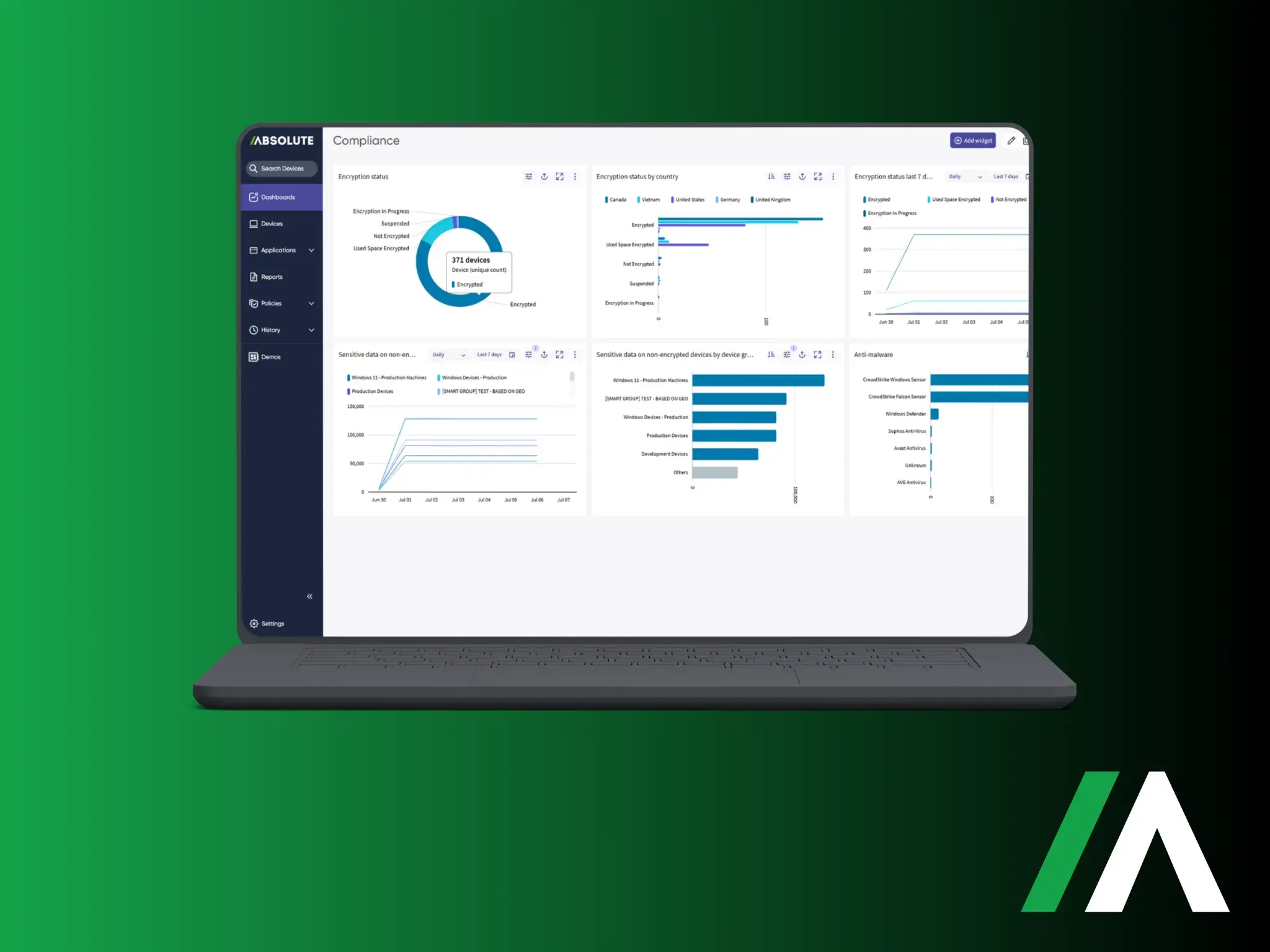
Absolute's approach sits deliberately at the enforcement layer, closing the gap that evidence-only platforms leave open. Absolute Resilience for Security and Absolute Resilience for Automation continuously monitor endpoint configuration against policy and automatically correct drift, shrinking exploitable and non-compliant windows from days to minutes rather than waiting for the next scheduled check. On the network side, Secure Access 14.50's Comply to Connect capability extends the same principle to network access, verifying a device's compliance posture before it connects rather than after.
Because that enforcement runs through Absolute Persistence, a connection embedded in the device's firmware rather than an agent that depends on the operating system staying healthy, it keeps working on exactly the devices evidence-only platforms lose visibility into first: the ones that have been off-network, reimaged, or had their agent disabled. For organizations in regulated industries specifically, see Government Cybersecurity Compliance: Key Strategies for 2025 for how this plays out in government environments, and What Does FedRAMP Certification Mean? for what federal authorization specifically requires.