Endpoints that patch, remediate, and heal themselves.
Autonomous endpoint management tied to the firmware. Absolute turns real-time intelligence into automated remediation even when the OS, agent or network fails.


Overview
Autonomous Endpoint Management means the platform detects, decides, and remediates on its own — patching, healing apps, and recovering devices within the guardrails you set. But autonomy fails the moment the platform loses its grip on the device. Absolute is built differently. Patented Persistence® technology, embedded in the firmware of 600+ million devices, keeps a secure, always-on connection between the Absolute platform and your endpoints — so automation always reaches the device, and any device can be brought back. Autonomy you can trust, because it can’t be turned off.
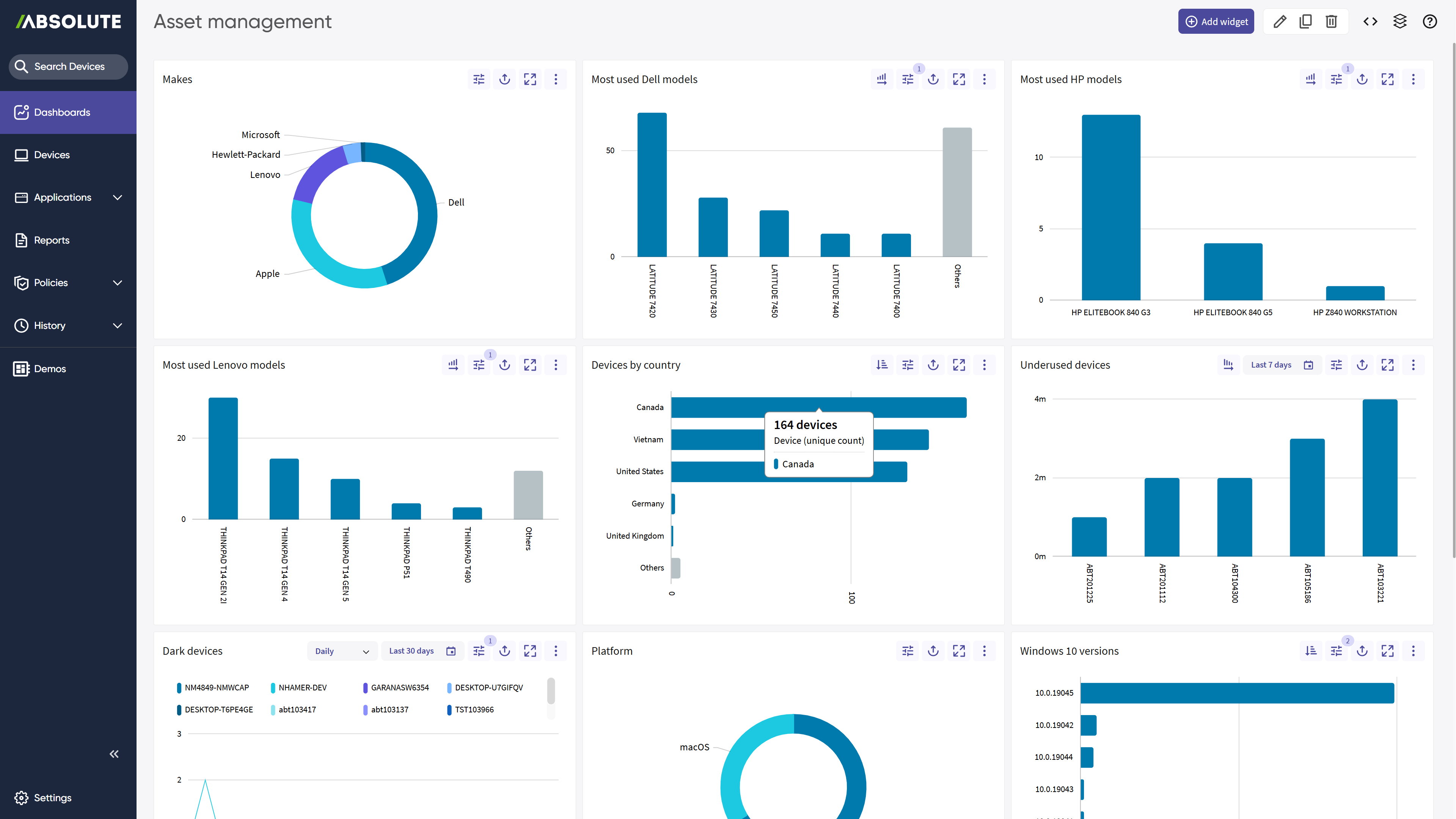
What you can automate

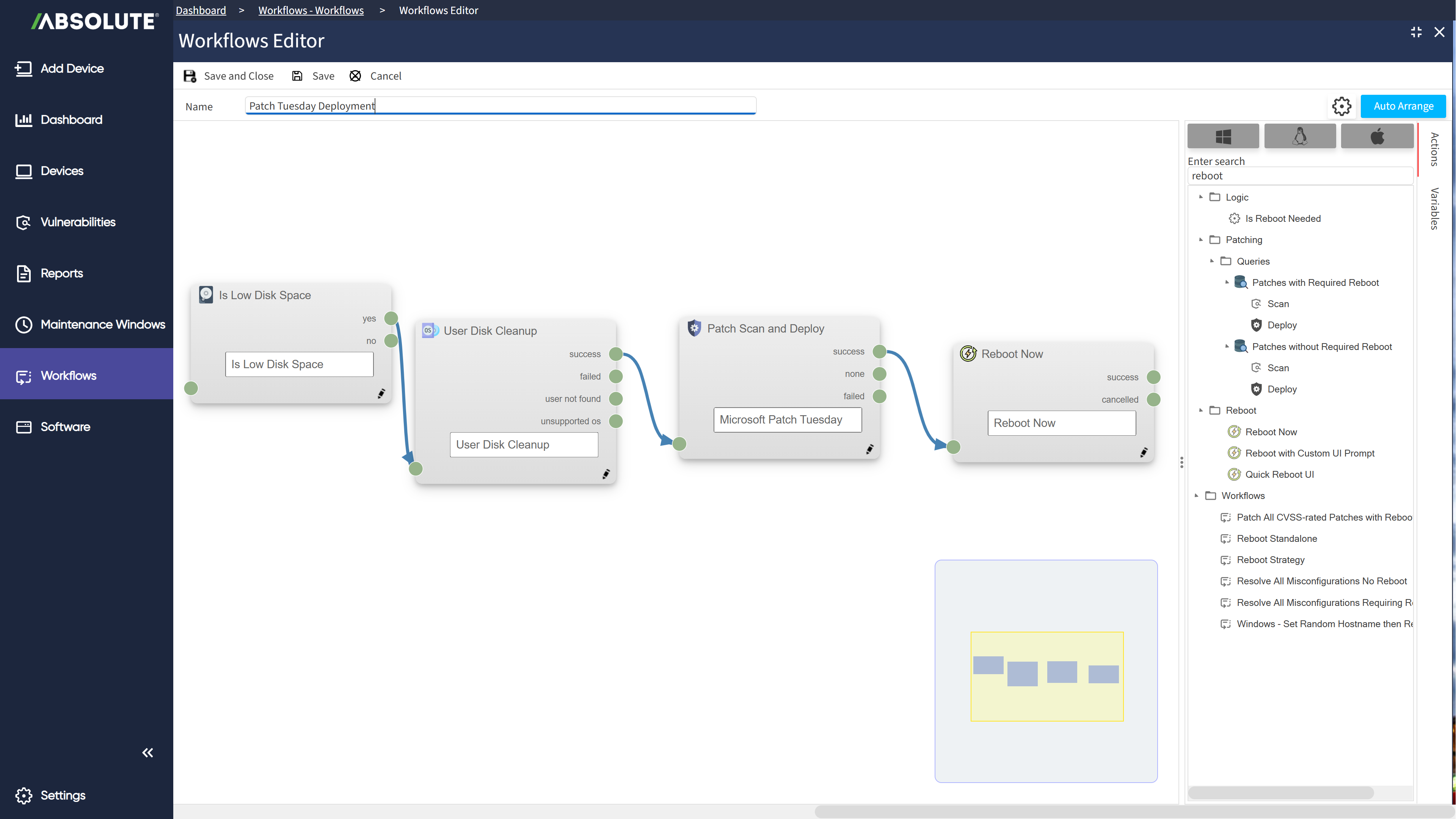
OS and third-party patches scanned, risk-prioritized, and deployed in confidence-based rings — cutting time-to-patch from days to minutes.

Resolve vulnerabilities and misconfigurations with no-code workflows you build in a visual editor.

Mission-critical security agents repair or reinstall themselves the moment they break or drift.

Restore compromised or non-compliant devices to a trusted state remotely — no site visit, no reimage.

AI-driven risk and behavior analytics decide what to act on — and you stay in control of every decision.

A firmware-embedded tether survives reimaging, drive swaps, and OS failure — the automation never goes dark.
Autonomy you can trust
Other platforms ask you to trust the automation. Absolute lets you verify it. You set the boundaries by policy, device group, and risk level; every action is logged and auditable; and because the firmware tether can’t be cut, any change can be rolled back and any device recovered — even after a failure or an attack.

Strengthens the security you already own
Absolute runs below the operating system, so it holds device truth other tools can't — real-time health, reachability, control status, and compliance that stay accurate even when an agent fails or a device drops off the network.
That ground truth makes the rest of your stack work harder. Absolute ingests signals from the identity, security, and IT systems you already run — Microsoft, CrowdStrike, Okta, ServiceNow, and more — enriches them with live device context, then returns resilience outcomes to your SIEM, SOAR, and ITSM: higher-fidelity detection, fewer false positives, and automated remediation across the stack.
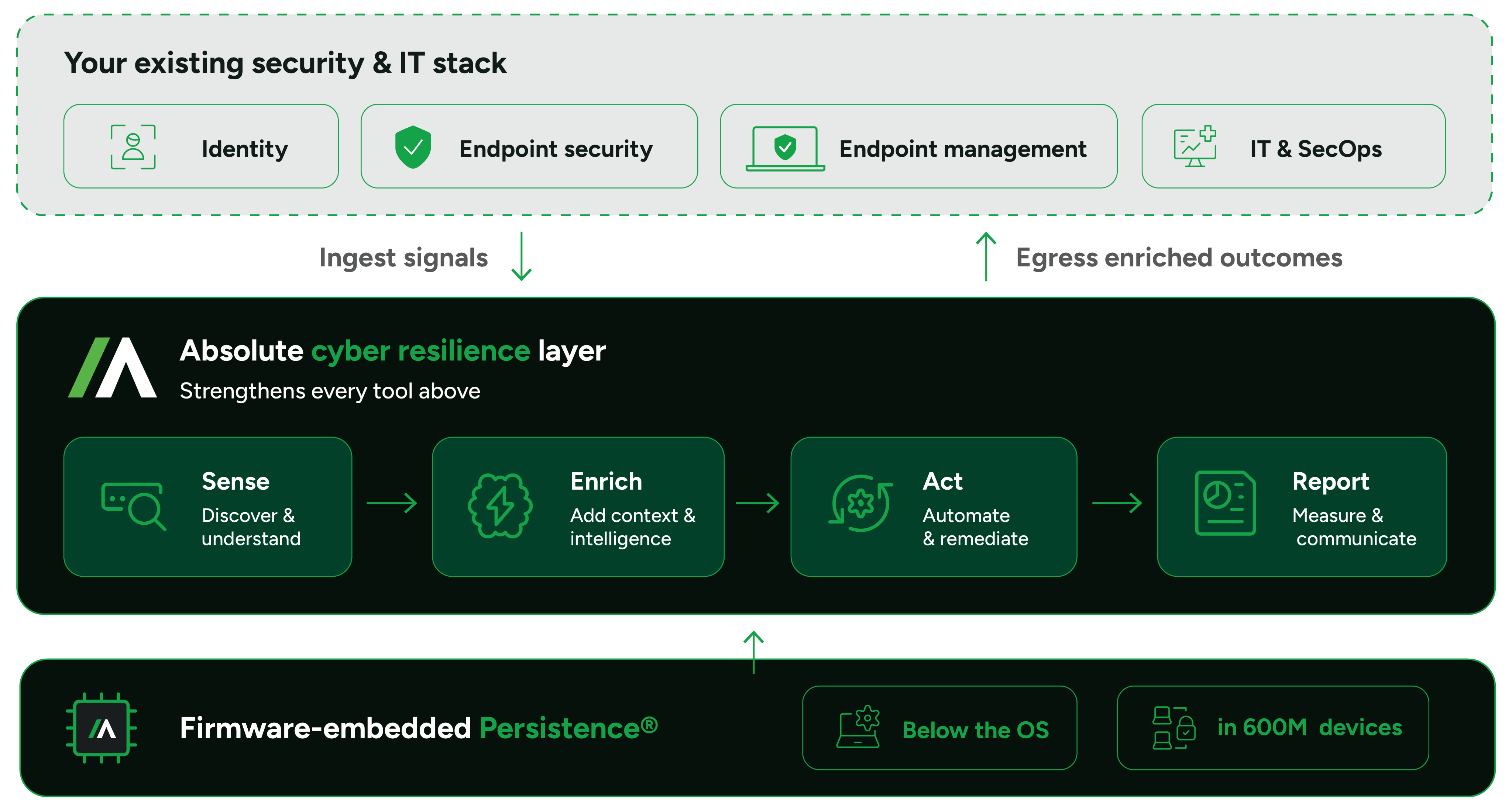
Absolute as the cyber resilience layer that ingests, enriches, acts, and reports across the tools you already run.
Endpoint security controls silently fail about 21% of the time. When a critical security agent goes missing or breaks, Application Resilience repairs or reinstalls it automatically — so the tools you’ve already bought keep delivering. Absolute doesn’t replace your stack; it makes every tool in it more reliable.
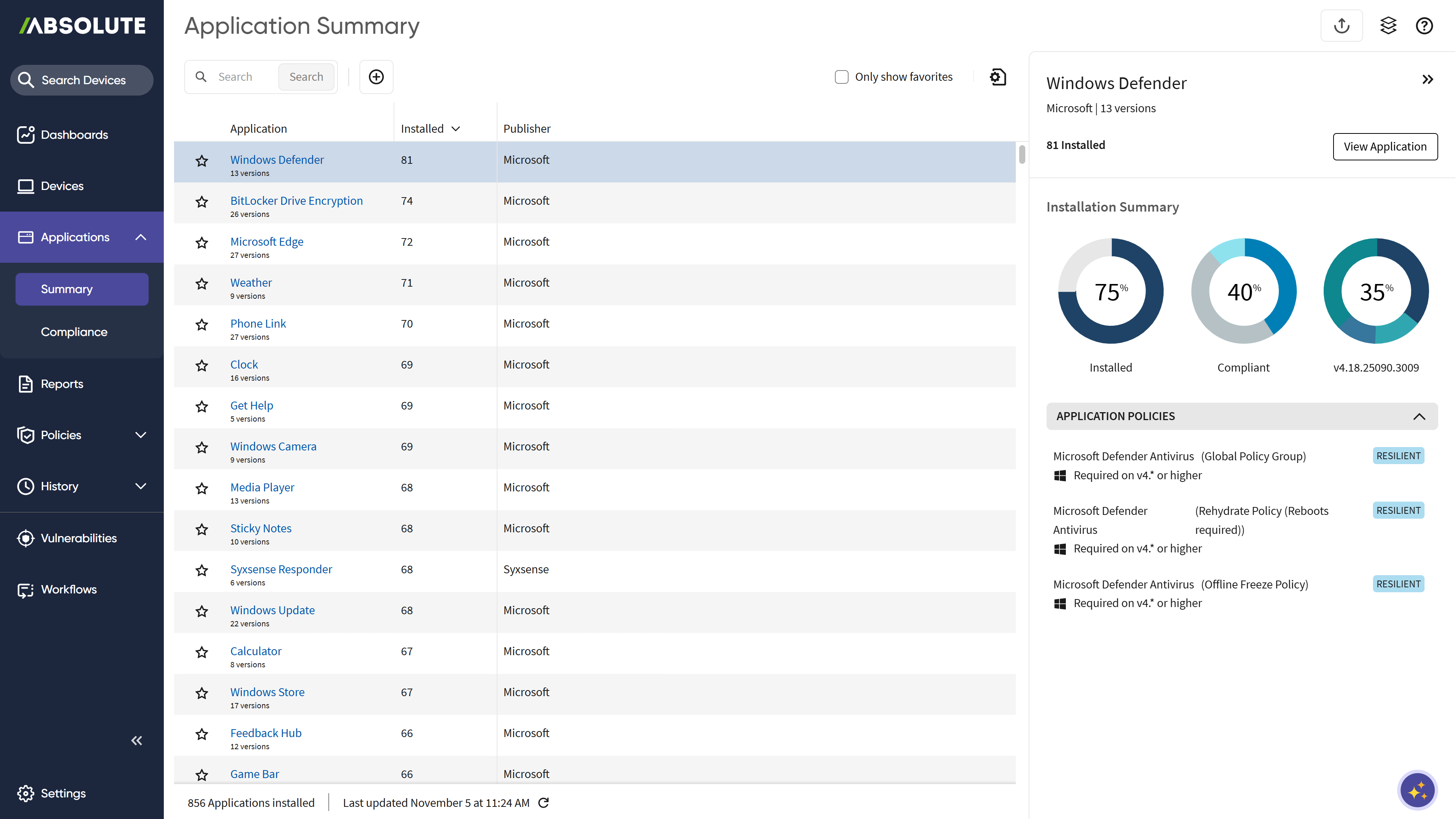
Application Resilience monitoring and auto-repairing.
Proof in numbers
devices with Persistence embedded
OEM partners in firmware
licensed PC users
recovery time with automation

Analyst recognition
A GigaOm Radar Leader for Patch Management and a Frost Radar™ Leader for Endpoint Security — also recognized in the 2026 Gartner® Magic Quadrant™ for Endpoint Management Tools.



Autonomous Endpoint Management FAQ
The platform continuously detects, decides, and remediates on its own — patching, healing apps, enforcing configuration, and recovering devices within the guardrails you set.
Other tools run autonomy on a software agent that can be removed or reimaged. Absolute runs it on firmware-embedded Persistence, so automation always reaches the device and the device can always be recovered.
No — it makes them more effective. Absolute ingests signals from your identity, security, and IT platforms, enriches them with below-the-OS device context, and feeds resilience outcomes back into your SIEM, SOAR, and ITSM. When a critical agent fails, Application Resilience repairs it — so your existing investments keep working.
No. You define the policies and risk tolerance; the platform acts within them and logs everything. Autonomy is granted incrementally.
Self-healing and automated recovery restore the device to a trusted state — and because the firmware tether can’t be severed, recovery works even after a failed change or attack.
Windows, macOS, Linux and ChromeOS. For details on supported versions, visit the system requirements page (https://www.absolute.com/platform/requirements).
The persistent firmware connection executes actions on-network or off-network, so remote devices stay managed and recoverable anywhere.
Already factory-embedded in 600M+ devices, Absolute activates fast — there’s no new agent to roll out. Persistence is already in the firmware, so you turn on autonomy rather than deploying it.
Automated workflows provide auditable proof of device state and timely remediation, helping meet mandates like HIPAA and GDPR.