

What Are the Best Autonomous Endpoint Management Solutions?
Key Takeaways
- "Autonomous" needs a definition, not a buzzword, and endpoint management vendors aren't even using the same one. True autonomy requires closing the detect-decide-act loop without a human triggering each step, validating safety before acting, and surviving the exact scenario autonomy matters most for: a device that's off-network, wiped, or had its agent disabled.
- Tanium, Ivanti, NinjaOne, and Omnissa Workspace ONE all now market AI-driven autonomous endpoint management, and each clears the first bar: acting without a technician starting each task.
- CrowdStrike's 2026 "autonomous" push is about something else entirely. Falcon Guardian governs autonomous AI agents running on endpoints, not the endpoints' own patch and configuration management, a different meaning of the same word.
- Almost nothing on this list passes the third test. Every platform here is agent-based, which means the worse a device's condition, the less autonomous the fix actually is.
What "autonomous" has to mean for endpoint management
"Autonomous" shows up in nearly every endpoint management vendor's pitch now, and it means something different depending on which one you ask. A platform that runs a nightly script isn't autonomous, it's scheduled. The label only earns its keep if a solution clears three bars.
- It closes the loop. The platform detects a gap, decides what to do about it, and acts, without a person manually kicking off each step.
- It validates before it acts. A system that can't test, stage, or roll back a bad change isn't ready to act without supervision, it's just moving fast.
- It survives the hard case. The device that's off-network, wiped, reimaged, or running an agent that's stopped checking in is exactly where autonomy is worth the most and delivered the least.
The vendors claiming autonomous endpoint management today
Tanium
Tanium's autonomous patch management combines AI with real-time endpoint intelligence, assigning Confidence Scores based on installation success rates, crash frequency, and performance impact before a change rolls out further. Tanium was named a Leader in the 2026 Gartner Magic Quadrant for Endpoint Management Tools.
Ivanti Neurons
Ivanti added Continuous Compliance to Neurons in April 2026, automatically patching out-of-compliance endpoints outside scheduled windows, followed in July 2026 by Predictive Remediation, which forecasts whether a change will meet its compliance deadline and flags likely failures before the window closes.
NinjaOne
NinjaOne's Autonomous Patch Management is built for multi-tenant use by MSPs: set a policy once and enforce it across Windows, macOS, Linux, and more than 8,800 third-party applications, with Patch Intelligence AI pausing unstable updates before they cause disruption.
Omnissa Workspace ONE
Omnissa Workspace ONE topped Gartner's 2026 Critical Capabilities report across all four endpoint use cases it evaluated, including unified and autonomous endpoint management, making it one of the few platforms on this list that uses the word "autonomous" with direct analyst backing specifically tied to that capability.
Microsoft Intune and Windows Autopatch
For Microsoft-centric enterprises, Windows Autopatch automates Windows and Microsoft 365 app updates through staged deployment rings with minimal admin intervention. It's deeply native to Microsoft 365 and Entra ID, though its autonomy, like the platforms above, depends on the device staying reachable and the agent staying intact.
Why "autonomous" means something different at CrowdStrike
CrowdStrike's own 2026 "autonomous" announcement is worth calling out specifically, because it's not describing the same thing as the vendors above. Falcon Guardian, launched at Fal.Con 2026, discovers and governs autonomous AI agents running on an endpoint, deciding which agents are allowed to run and enforcing that policy at runtime. That's a real and growing problem worth solving, but it's AI agent governance, not autonomous management of the endpoint's own patch level or configuration. The two get conflated easily because both use the word "autonomous" and both happen at the endpoint, but they're answering different questions.
Where agent-based autonomy stops short
Every platform surveyed above, Tanium, Ivanti, NinjaOne, Omnissa, Intune, is agent-based: software running inside the operating system is what receives instructions and carries out the fix. That's a reasonable design for routine management, and it's why these platforms can legitimately claim AI-driven automation.
It's also a shared dependency. If the operating system is corrupted, the device is wiped, or the agent itself has been disabled, there's nothing left on the device to receive the autonomous instruction. The management layer that was supposed to run itself now needs a technician, a reimage, and a new agent install before autonomy can resume, exactly when a device needs it most.
What true autonomy requires when the device itself is the problem
A connection embedded in the device's firmware, below the operating system, doesn't share that failure mode. It survives a wipe, a reimage, or a factory reset, because it isn't part of what gets wiped. That's the architectural difference between automating management for devices that are already healthy, and staying in control of the ones that aren't.
How Absolute approaches autonomous endpoint management
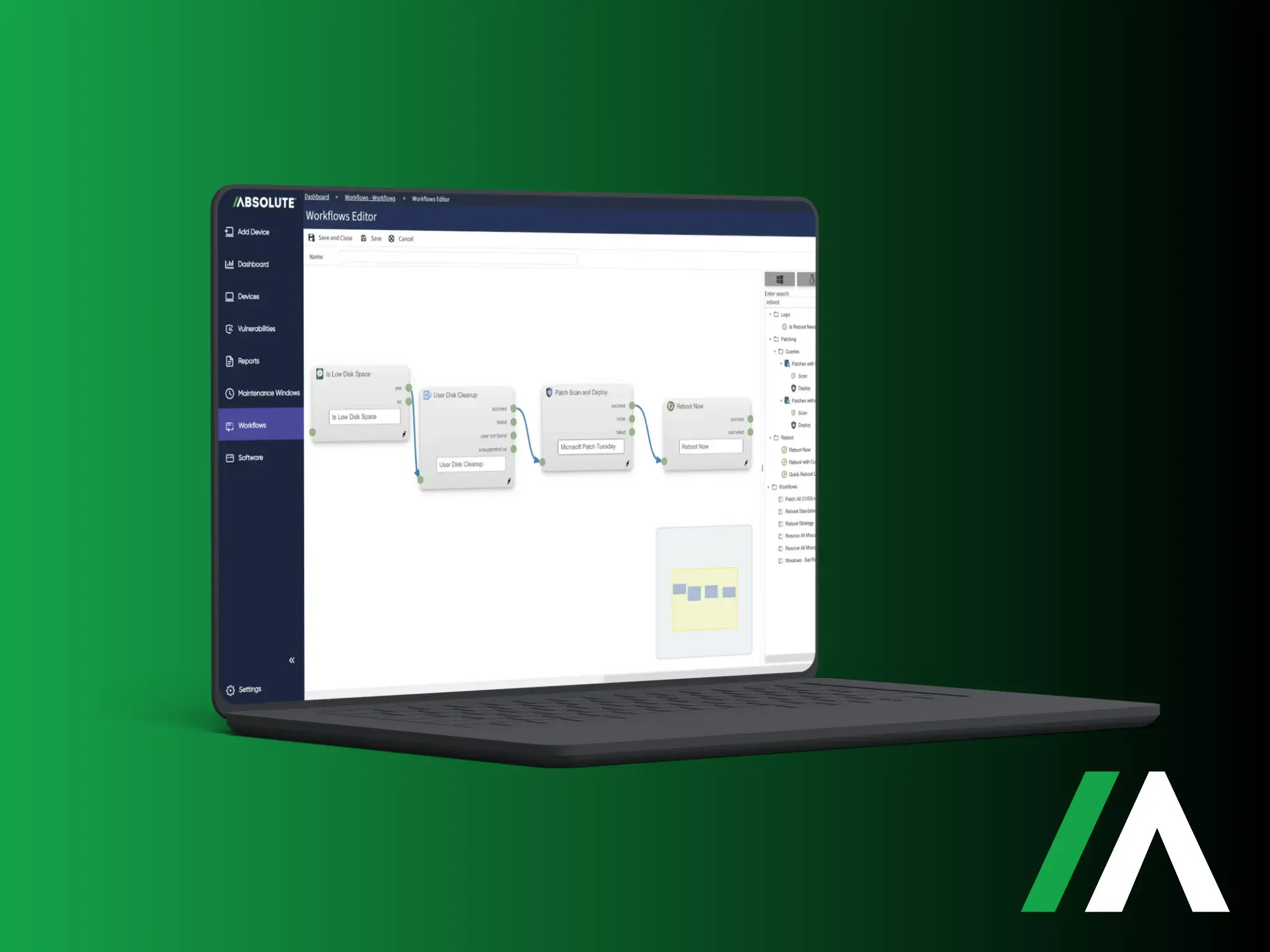
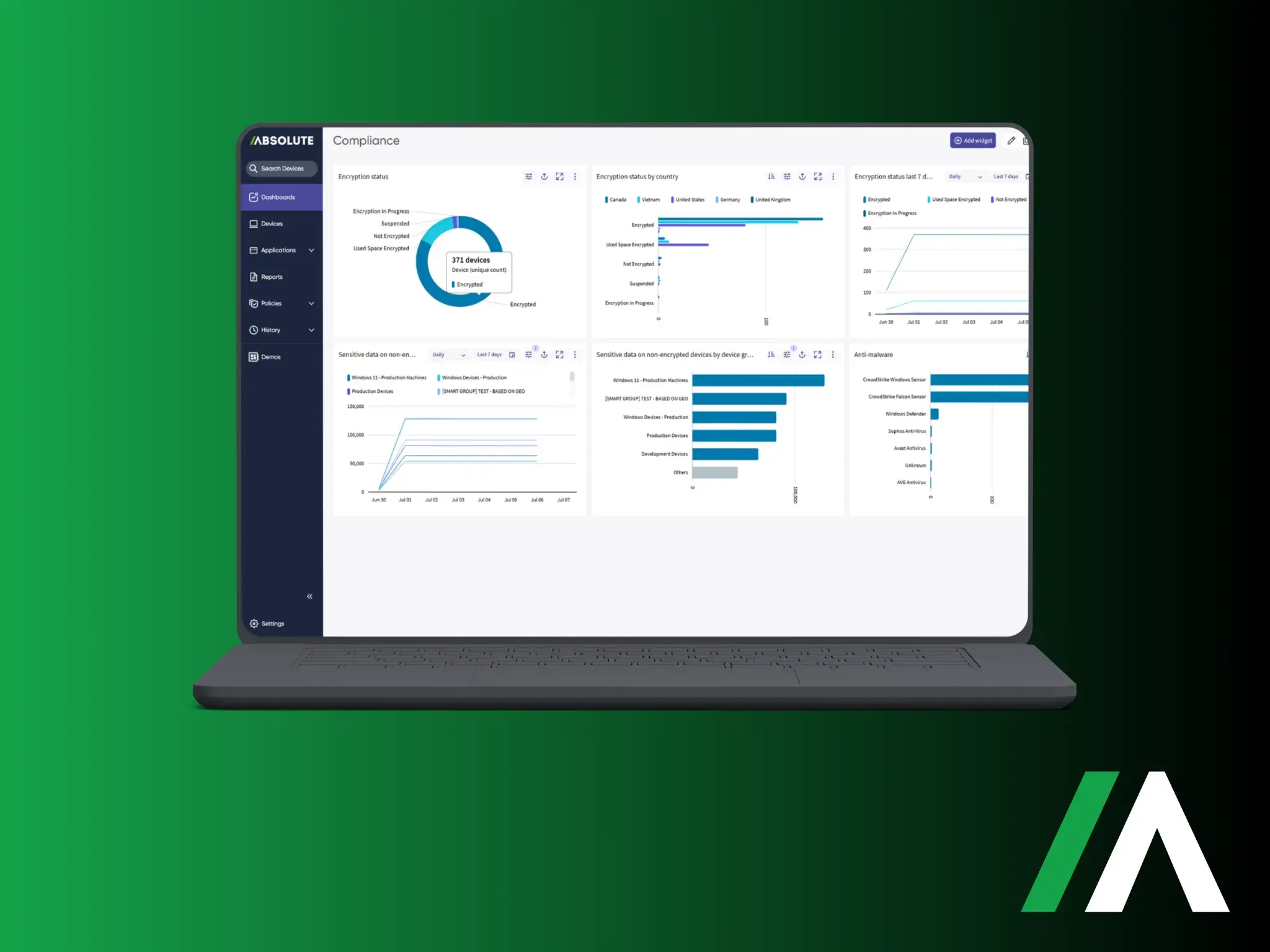
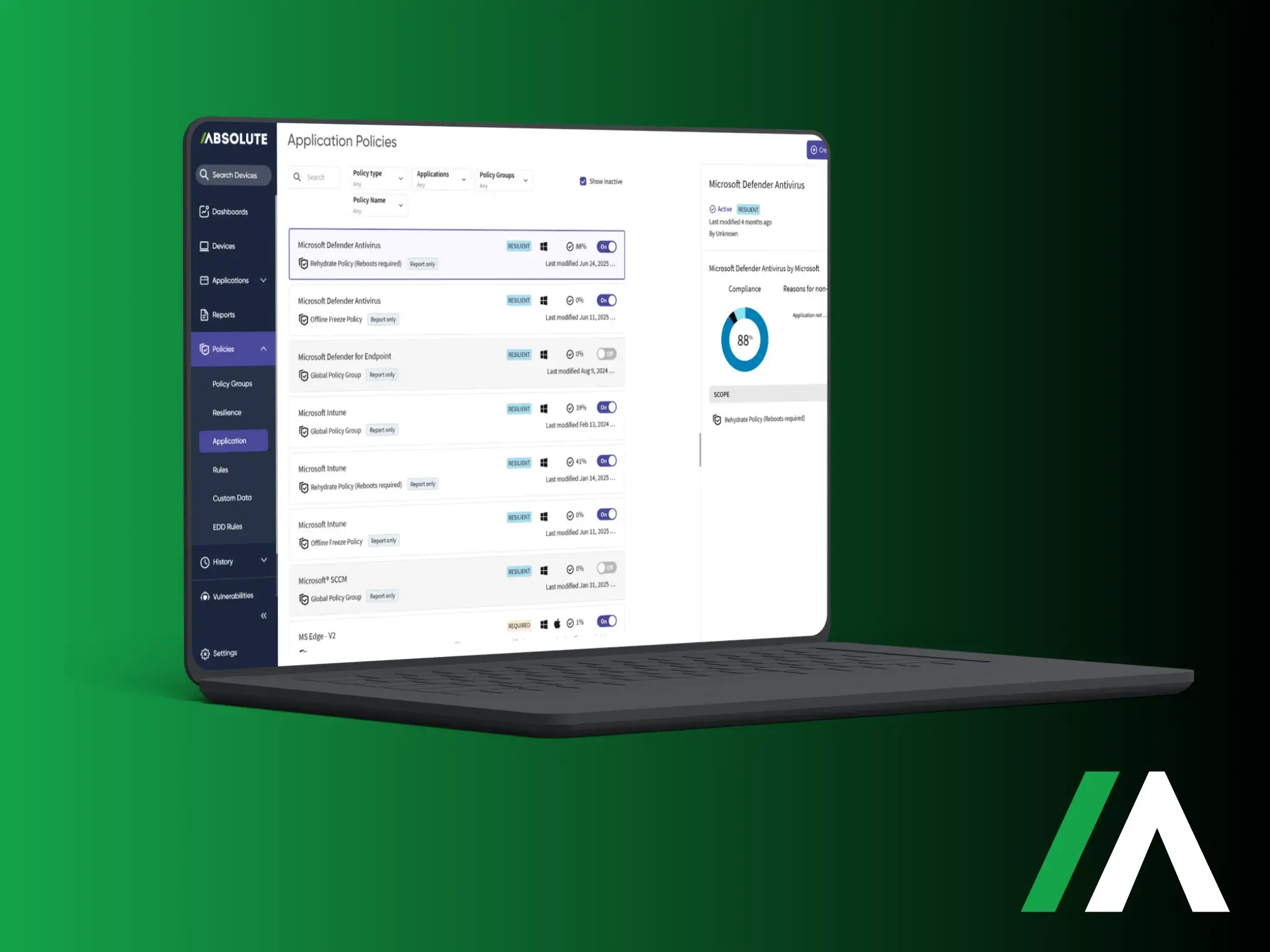
Absolute's Autonomous Endpoint Management is built on Absolute Persistence, embedded directly in the firmware of supported Windows devices. The platform detects, decides, and remediates on its own, patching, healing applications, and recovering devices within guardrails IT sets, and that loop keeps functioning on a device that's off-network, reimaged, or has had its agent disabled, the exact case where the agent-based platforms above go dark. Absolute Resilience for Automation extends this to policy-driven remediation of configuration and security vulnerabilities. Absolute has been named a Leader in G2's Summer 2025 Grid Report for Endpoint Management Software and a Notable Vendor in Forrester's Endpoint Management Landscape, Q3 2025.
For a broader, use-case-based comparison of endpoint management platforms, see Best Endpoint Management Software for Enterprises in 2026, and for the same autonomy test applied specifically to patch management, see Truly Autonomous Vulnerability & Patch Management, Explained.
Request a demo to see our solutions in action, or explore our resource library for more.