Closing a Blind Spot for Linux, and Extending Autonomous Cyber Resilience Across the Platform
The Problem: A Growing, Harder-to-See Estate
Today’s device estate is bigger and harder to see than it’s ever been. Linux now runs engineering workstations, field devices, and other specialized endpoints alongside the traditional Windows and Mac fleet. Remote and hybrid work means more of that estate sits outside the traditional perimeter, connecting from unmanaged networks and unpredictable locations. More platforms, more locations, and more ways for a device to slip out of view add up to more opportunities for one to go missing, fall out of compliance, or get compromised without anyone noticing.
That’s the thinking behind Autonomous CyberResilience: capabilities that anticipate, withstand, recover from, and adapt to disruption, so teams respond before problems escalate instead of discovering them by chance. With this release, we’re extending that model across the platform, including to Linux.
What's New in This Release
1. General Availability of the Secure Endpoint Agent for Linux
45% of organizations have to manage Linux machines without the same tooling they rely on for Windows and Mac(EMA, 2026), even for standard enterprise distributions like Ubuntu and RHEL.Without a unified way to act on these devices, a compromised machine can go unnoticed.
The Linux agent for SecureEndpoint is now generally available on supported Ubuntu and RHELWorkstation distributions, giving IT and security teams the remote visibility and control to respond to compromise or non-compliance. It adds two capabilities new to Linux, alongside patching, remediation, and automation which continue running as before:
- Device inventory via hardware data collection, so Linux devices show up in the same console as the rest of your fleet.
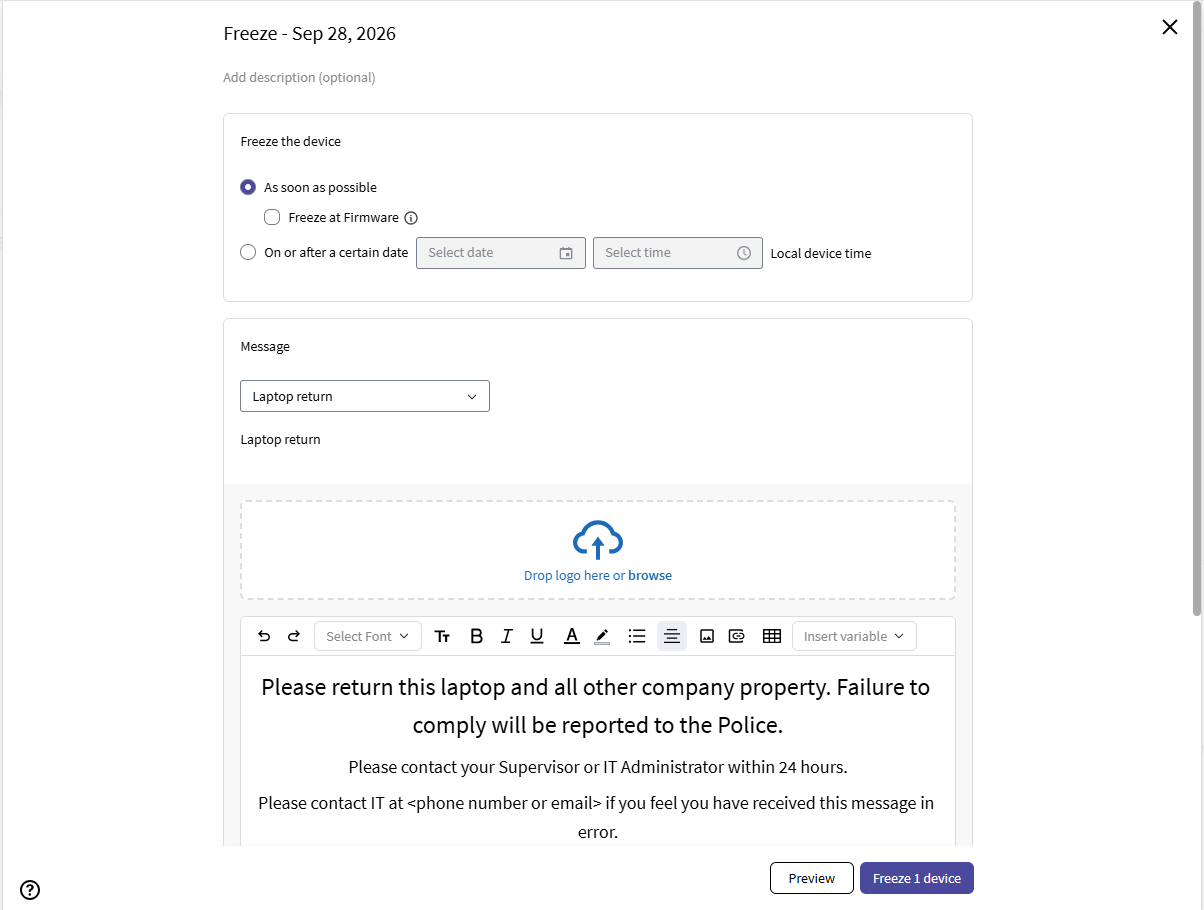
- On-demand or scheduled Device Freeze to lock down a compromised, stolen, or non-compliant Linux device the same day.
- Offline Device Freeze to automatically freeze a device that has not checked in to the Absolute server within an admin-defined period.
The Linux agent brings remote visibility and control to Linux devices from the same console used for the rest of the fleet.
Key Benefits:
- Bring Linux devices into the same console, policies, and reporting as the rest of the fleet
- Remotely freeze a compromised or non-compliant Linux device, on demand or on a schedule, even while it's offline
2. AI PerformanceInsights for Secure Access (Phase 1 — Wi-Fi)
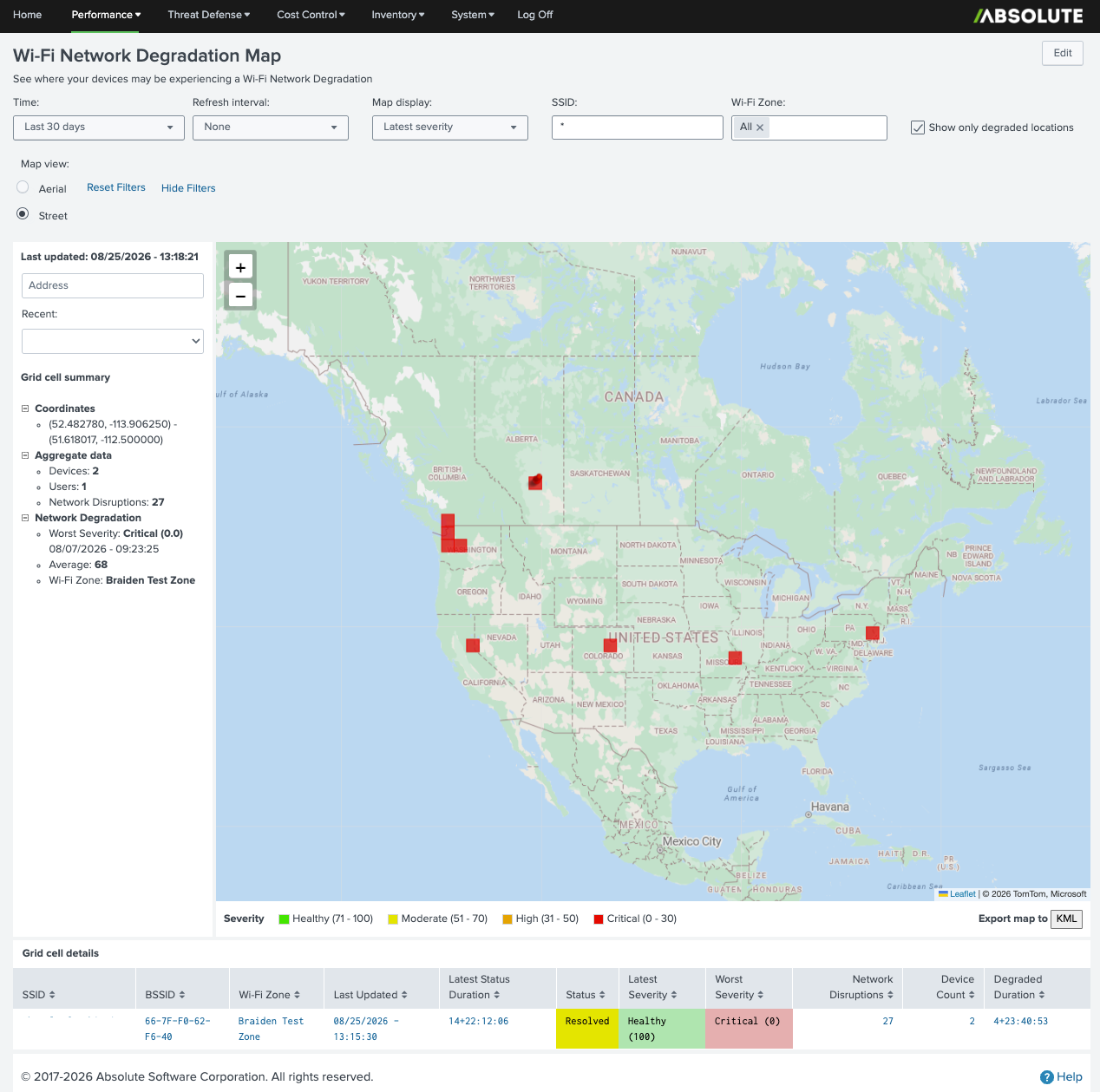
On the Secure Access side, this release introduces the first phase of AI Performance Insights — a proactive, AI-driven capability that detects Wi-Fi-related network performance issues at the endpoint before they escalate into help desk tickets.
Available with Absolute Edge and Absolute Enterprise, AI Performance Insights is designed to shift network support from reactive troubleshooting to proactive detection for the growing population of remote and hybrid employees working outside the traditional corporate perimeter. Findings surface through Absolute's Insights for Network dashboards, so IT teams can address connectivity issues before they turn into tickets.
Available with Absolute Edge and Absolute Enterprise, AI Performance Insights is designed to shift network support from reactive troubleshooting to proactive detection for the growing population of remote and hybrid employees working outside the traditional corporate perimeter. Findings surface through Absolute's Insights for Network dashboards, so IT teams can address connectivity issues before they turn into tickets.
Key benefits:
- Fewer help desk tickets and faster time-to-resolution for Wi-Fi issues
- Less unplanned downtime for the anywhere workforce
- A first step toward a broader roadmap of AI-driven network intelligence
Also in this Release
A handful of smallerenhancements round out the release:
- Single Agent for Patching, Remediation, and Automation — Absolute's Patching, Remediation, and Automation capabilities now run through the same agent already used for Visibility, Control, andResilience. On Windows, that shared agent is firmware-embedded, giving teams a persistent, self-healing connection even when endpoint software is impaired.
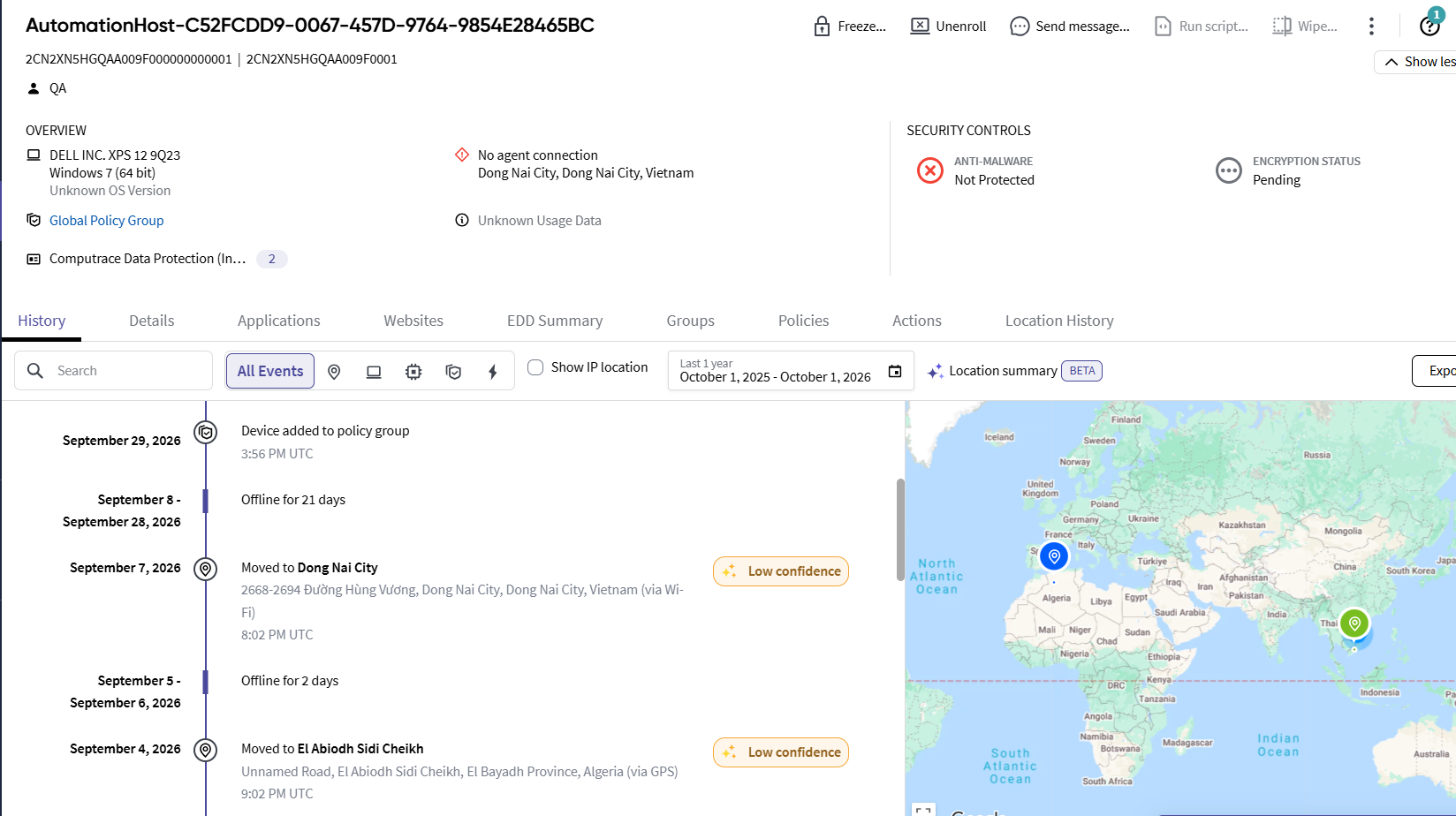
- Geolocation Enhancements (AI-Generated LocationInsights) — Consolidates two previously separate, sometimes conflicting, location views into one Location History experience, with an improved Timeline and a new AI Summary that condenses movement into a readable narrative and cross-checks location, Wi-Fi SSID names, and ISP information for a confidence score. Available for Windows, Mac, and Chrome.
- Day-One Support for macOS 27 — With macOS 27 as the final release to support Rosetta, Absolute provides native (not emulated) agent support across the full Secure Endpoint feature set from day one.
- Automated Application Resilience Compliance Checks —Absolute's Application Resilience catalog self-heals 80+ mission-criticalapplications the moment they're disabled or drift out of compliance, withcompliance checks that now update automatically as vendors release new appversions.
- FedRAMP-Authorized Rehydrate and Firmware Freeze — Absolute'sRehydrate (device recovery) and Firmware Freeze (device lockdown) — both firmware-level — are now part of Absolute's FedRAMP-authorized offering, letting federal customers recover or lock down a compromised device within their authorized boundary.
- Self-Hosted Deployment for Absolute Secure AccessEnterprise — Absolute Secure Access Enterprise — ZTNA, Secure Web Gateway and Insights for Network — is now available self-hosted, alongside the existing SaaS offering, extending modern secure access to organizations that can't adopt cloud-only tools.
Why This Release Matters
- Closes a long-standing blind spot on Linux, letting IT respond to a compromised or non-compliant device remotely, without physical access.
- Shifts network support from reactive to proactive. AI Performance Insights flags Wi-Fi issues before they become help desk tickets.
- Extends resilience to more of the estate. From FedRAMP environments to macOS 27 to a growing Application Resilience catalog.
Looking Ahead
This release brings Linux into the same console as Windows, Mac, and Chrome devices. It reflects where we are taking Autonomous Cyber Resilience next: fewer gaps between operating systems,less reliance on chance, and more resilience extended across the estate.