Autonomous cyber resilience, powered byAbsolute
Autonomous cyber resilience is the ability to remain operational through any disruption and autonomously recover in minutes, not weeks. It's the principle running beneath everything we build.
For years, the job was to keep attackers out. That job is over. The mandate has changed: from keeping incidents out to keeping the business running through them. That is the shift every security leader is now measured against.

.svg)
— NIST Special Publication 800–160, Vol. 2, Rev. 1

The mandate has changed.
The job moved from keeping attacks out to keeping the business running through them.
Protected is not the same as resilient.
Protection lowers the odds of an incident. Resilience decides what happens after one lands.
What cyber resilience actually requires
Security you can switch off isn’t security.
If a control can't reinstate itself when removed, it was only ever a suggestion.
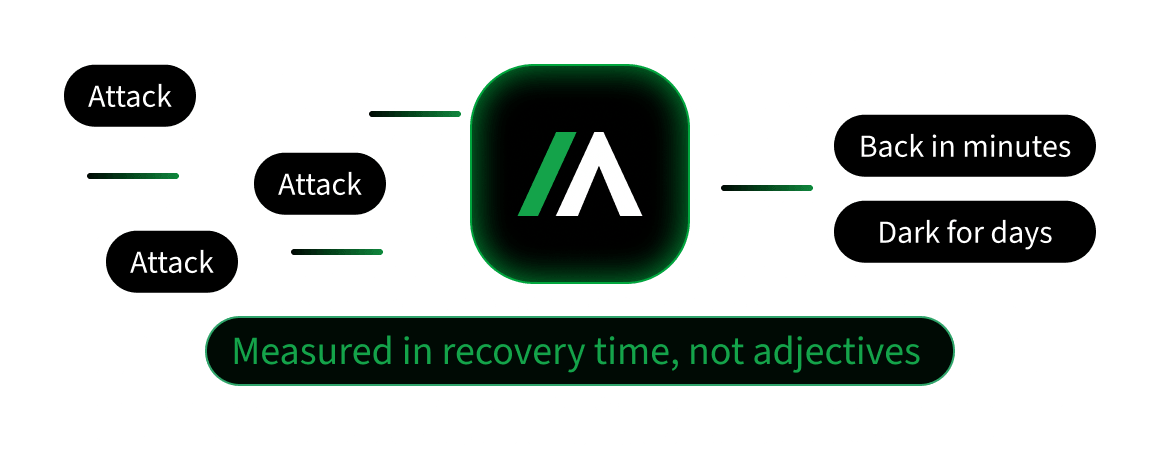
Resilience is measured in recovery time.
If a vendor can't say how fast they restore a compromised device, it’s protection relabeled.
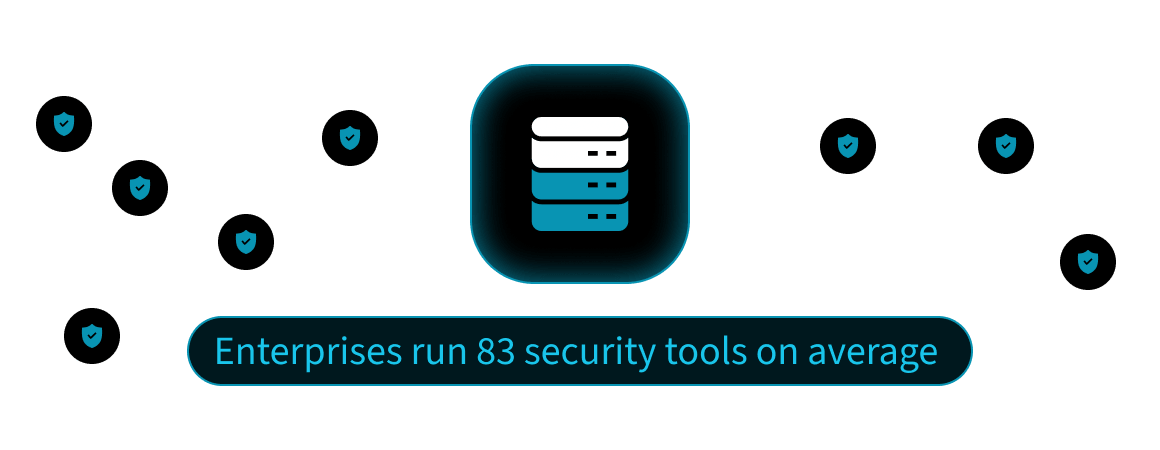
Protected
Resilient
PLATFORM
The Gartner Cyber Resilience Framework
Anticipate
See every device and every exposed vulnerability before it's exploited. Continuous visibility is the ground truth resilience is built on. You can't protect what you can't see.
Resilience
Hold a constant connection to every device and keep critical controls alive under fire. When security agents are disabled or drift out of policy, resilience means they are restored automatically, with no one dispatched to touch the device.
Recover
Restore compromised fleets to a trusted, compliant state with a single action. Weeks of downtime become minutes, at scale, across remote and hybrid devices.
Adapt
Every incident feeds the next defense. Patching tightens, gaps close sooner, and resilience compounds instead of resetting to zero after each attack.
How Absolute delivers
autonomous cyber resilience
We do not sit on top of the stack. We live beneath it. Most security lives in software; the same layer an attacker can disable, delete, or wipe. Absolute Persistence technology lives in the firmware, the deepest layer of the device, embedded at the factory in more than 600 million endpoints.
Reimage the machine, and we are still there. Kill the agent, and it self-heals. That is what lets us make a promise nothing above the firmware can: your security is always on and protected on any device, every time. Cyber resilience is not a feature on our roadmap. It is the foundation the roadmap is built on.
Always-on connectivity
An undeletable line to every endpoint — remote, hybrid, on-prem, or off the corporate network entirely. You never lose sight of, or control over, a device, even mid-incident.
Autonomous vulnerability remediation
Surface exposed and misconfigured devices, then close the gaps with automated workflows. Shrink the attack surface before it's used against you.
Proactive patching
Keep operating systems and mission-critical apps current with seamless, proactive patch management. Fewer unpatched holes means fewer incidents to recover from.
Self-heal capability
Reinstate security controls the moment they're removed or fail, keeping 80+ mission-critical tools running so you keep defending.
The promise beneath everything
Defense buys you a chance. Cyber resilience gives you certainty.

Frequently asked questions about autonomous cyber resilience
Cyber resilience is the ability to stay operational through disruption and recover fast when controls fail. It is defined against NIST's four stages: anticipate, withstand, recover, and adapt.
Protection lowers the odds an incident lands. Resilience decides what happens after one does — whether you're back in minutes or dark for days. You can be fully protected and completely un-resilient, and most enterprises are.
We define cyber resilience the way NIST does: the ability to anticipate, withstand, recover from, and adapt to disruption. Gartner's cyber resilience research uses substantially the same four concepts. Most of the market builds for the first stage and calls it resilience. Absolute builds for all four, with firmware-embedded persistence running beneath each one.
Most security solutions live in software, a breakable layer an attacker can disable, delete, or wipe. Absolute’s undeletable connection is embedded in the firmware of over 600 million devices, beneath the OS, where it can't be removed or tampered with, giving you a permanent line of sight and control.
Absolute restores compromised or bricked devices to a known-good state in minutes, with no ticket and no technician. That turns the industry's multi-day recovery average into a task measured in minutes, at scale across remote and hybrid fleets.
Downtime costs the global economy an estimated $600B a year (Splunk/Cisco, 2026). Absolute delivers a 312% three-year ROI with payback in under six months (Forrester), reframing resilience as a revenue-protecting investment rather than a cost.